
First Colony sold 172 homes in the twelve months to August 2026 at a median of $540,000. Half went under contract inside 19.5 days. Prices ran from $246,500 to $5,255,000. That range is the point. First Colony is not one market. It is about a hundred neighborhoods built across twenty years, and the median describes almost none of them.
The most useful thing I can tell you is this. In First Colony, the build year predicts your price per square foot better than almost anything else. It also moves in a direction nobody expects.
First Colony at a glance
I pulled these figures from the HAR MLS on 25 August 2026 using the First Colony master-planned community code. The search returned 236 records. I removed two by hand after checking their addresses. One sits in Colonial Hills, in north Houston about forty miles away. The other sits in Forest Colony, in a different market area entirely. The numbers below rest on the remaining 234.
| Measure | Sold, 12 months | Active |
|---|---|---|
| Listings | 172 | 62 |
| Median price | $540,000 | $691,444 |
| Median price per sq ft | $185.24 | $201.99 |
| Median size | 3,034 sq ft | 3,231 sq ft |
| Median days on market | 19.5 | 45.5 |
| Median year built | 1990 | 1990 |
| Price range | $246,500 to $5,255,000 | $278,000 to $2,599,000 |
Source: HAR MLS, closed sales 25 August 2025 to 25 August 2026 plus active listings on 25 August 2026. Sales covered build years from 1978 to 2016 and sizes from 1,138 to 15,539 square feet.
What a house costs depends on which decade built it
I split the 172 sales by build period. The price ladder climbs steadily, from $370,000 for the earliest homes to $760,000 for the newest. That part is unsurprising. The rate per square foot is where it gets interesting.
| Built | Sold | Median price | Median $/sq ft | Median size | Median DOM |
|---|---|---|---|---|---|
| 1978 to 1984 | 29 | $370,000 | $177.56 | 2,255 sq ft | 27 |
| 1985 to 1989 | 42 | $492,500 | $175.48 | 2,944 sq ft | 21 |
| 1990 to 1994 | 44 | $645,000 | $193.99 | 3,280 sq ft | 15 |
| 1995 to 1999 | 25 | $661,500 | $173.20 | 3,220 sq ft | 14 |
| 2000 and later | 31 | $760,000 | $240.52 | 3,258 sq ft | 29 |
Rate per foot does not rise with build year. It wanders. The cheapest homes per square foot in the whole community date from 1995 to 1999, at $173.20.
Those late-1990s homes rank among the largest at 3,220 square feet. They also sell faster than anything else, at 14 days. Nearly the biggest, the cheapest per foot, and the quickest to trade.
Compare them to the 2000-and-later homes. Those cost 28 percent more per square foot for a house 38 square feet larger. You are paying about $67 a foot for roughly five years of build date.
If you are buying in First Colony and you care about value rather than newness, start with the late 1990s. A listing agent may tell you a 1997 house and a 2003 house are comparable. They are not, and the gap is not small.
The price ladder is really a size ladder
Look again at the first two build periods. A 1978 to 1984 home sells for $370,000 and a 1985 to 1989 home for $492,500, a difference of $122,500. But per square foot the older group is actually more expensive, $177.56 against $175.48.
The entire price difference is size. The later homes are 689 square feet bigger. First Colony did what most long-running communities do: it built bigger houses as it went. Reading the price ladder as a quality ladder gets it wrong.
Sellers are asking more per foot than buyers are paying
The active median of $691,444 sits 28 percent above the sold median of $540,000, which looks alarming. Some of that is composition, since the listed homes are about 200 square feet larger. But per square foot the gap is still 9.0 percent, and that part is real.
I checked whether the luxury end explains it. Sweetwater, the gated country club section, sold nine homes at a median $1,661,900 and $280.26 per square foot. That is a 54 percent premium per foot over the rest of the community. Strip Sweetwater out entirely. The remaining listings still ask 9.4 percent more per foot than the remaining sales closed at.
So it is not a handful of mansions skewing the number. It runs through the community.
Days on market says the same thing. Sold homes took 19.5 days. Active listings have already sat 45.5. Forty-two percent of sales close within two weeks here. A listing sitting past six weeks is telling you something about its price.
Inventory is healthy at roughly 4.3 months of supply. This is not a soft market. It is a market where correctly priced homes go fast and optimistic ones sit.
Every price point in one community
Of the 172 sales, 24 percent closed under $400,000 and 31 percent between $400,000 and $600,000. Another 26 percent landed between $600,000 and $800,000. The top 19 percent cleared $800,000, including 16 sales over $1.2 million.
Very few master-planned communities in Fort Bend County span that range. It also makes a single First Colony median close to meaningless for any individual buyer. I would rather show you comparables from your build era and your section.
The First Colony you buy into may not be in the First Colony association
This is the thing buyers get wrong most often, and the association says so on its own website.
The First Colony Community Services Association, established in 1982, is the largest of several associations here. It is not the only one. When development started, the earliest neighborhoods were set up with their own separate associations. Most later neighborhoods came into the main association, but the early ones never did.
Per the association’s own neighborhoods page, these sit outside it with their own HOAs:
- Avalon
- Chimneystone
- Colony Village and the Highlands
- Settlers Grove and Settlers Park
- Sugarwood
An umbrella body, the Associations of First Colony, coordinates shared maintenance. It spans the main association, the commercial owners association and those separate HOAs. Condominium and townhome neighborhoods often belong both to the main association and to their own sub-association.
The practical consequence is simple. Your dues, amenity access and deed restrictions depend on the neighborhood, not on the words “First Colony” in the listing. Ask which association governs the specific address before you write an offer, and ask what it includes.
How big is First Colony? It depends who is counting
Hines, the developer, describes 9,700 acres and a population over 60,000. Its count runs to nearly 14,000 homes, 1,700 apartments, 750 townhomes and 169 condominiums. Other references describe roughly 9,500 houses across 98 neighborhoods and about 50,000 residents. Some sources round the acreage to 10,000.
Both are defensible and they count different things. The developer figure covers the whole Sugarland Properties build-out including apartments, townhomes and commercial. That lower figure approximates single-family rooftops. The MLS gives a third view again, at 133 distinct section names across my 234 records. Recorded plat sections run finer than marketed neighborhoods.
I use “about 9,700 acres” and “roughly 100 neighborhoods” and flag that the precise count depends on the definition.
Who developed First Colony
Sugarland Properties Incorporated developed First Colony. Gerald D. Hines Interests ran it, and the long-term financial partner was the Royal Dutch Shell pension fund, Stichting Shell Pensioenfonds. Hines states that partnership, as do the Society of Architectural Historians and other independent references.
The land itself came from the Kempner and Eldridge families. They assembled it from 1906 to 1908 and ran it through Imperial Sugar and Sugarland Industries. The original purchase covered roughly 7,500 acres, and a further 1,800 acres was added later from the Frost Ranch. Development began in 1976 or 1977 depending on the source.
Planned Community Developers has handled the remaining development since 1997.
First Colony is not part of the Newland and Brookfield family
Worth stating plainly, because I have written about that lineage elsewhere on this site. Telfair, Greatwood, Cinco Ranch and Elyson all passed through Newland Communities and then Brookfield Residential. First Colony did not. It has been a Hines project throughout, and Planned Community Developers has handled the remaining development since 1997.
One point of confusion to head off: First Colony Mall is owned by Brookfield’s retail arm. That is the shopping center, not the neighborhood.
Sugar Land annexed First Colony in 1997
The city annexed the remaining First Colony municipal utility districts in 1997. It was the largest annexation to that point, roughly doubling the city’s population to nearly 60,000 residents. Some districts had already been annexed earlier, including one covering 1,064 acres and more than 2,300 homes in December 1991.
The municipal utility districts handled water and sewer, and those functions passed to the city. The levee improvement districts are separate flood control entities and they still operate and still levy. First Colony Levee Improvement District and First Colony LID 2 both maintain their own official sites.
I am not publishing a single blended tax rate for First Colony. Rates differ by section and change annually. Ask for the current rate on the exact address in writing and confirm it against the appraisal district.
Schools, and an active boundary review you should know about
Fort Bend ISD serves First Colony. A community of roughly a hundred neighborhoods spans several attendance zones, so there is no single answer. Clements High School opened in 1983 and serves much of the community. Dulles, Elkins and Kempner serve other sections. Elementary campuses include Austin Parkway, Colony Bend, Colony Meadows, Highlands, Lexington Creek and Settlers Way, among others.
Fort Bend ISD has an active boundary process right now. The district launched a multi-year district-wide boundary review in 2025, and in August 2026 published proposed middle and high school scenarios. Reporting from Click2Houston and Houston Public Media in August 2026 indicated First Colony Middle School was among the middle schools involved, alongside high school scenarios touching Clements and Dulles utilization, with board action anticipated in the fall of 2026. The district has said no schools will close in this round.
Verify the assignment for your exact address with Fort Bend ISD’s own lookup before you write an offer, and check it again close to closing while the review is live. I do not publish third-party campus ratings.
Flooding: which neighborhoods, and when
This section covers Hurricane Harvey in August 2017 and the Brazos River floods of 2016. It is history rather than a current condition, and I date it plainly because old flood coverage reads as present tense and unfairly damages owners selling today.
The Brazos crested at Richmond at 54.74 feet on 2 June 2016, then higher during Harvey at 55.19 feet on 1 September 2017.
Harvey flooding in Sugar Land was concentrated, not citywide. The City of Sugar Land reported roughly 230 to 250 flooded homes across the whole city, located mostly in Settlers Park, Chimneystone, Sweetwater Section 8 and Colony Park, with up to six inches of water entering homes. Community Impact quoted a levee district official placing most of the flooding in the southern part of the district and around Austin Parkway near Chimneystone and Settlers Park. The city noted the flooding followed the closing of levee district flood gates as the river rose.
During both events Fort Bend County ordered evacuations inside levee districts, including First Colony LID 1, as forecasts approached 59 feet at Richmond. Mitigation followed, including drainage studies for Settlers Park, Chimneystone, Austin Park and Sugar Lakes.
Two things matter here. Roughly 250 homes out of a city of well over a hundred thousand people is a concentrated event, not a general condition. And the affected addresses cluster in particular subdivisions, so the risk is specific to the lot rather than to the community. Check the address on FEMA’s Flood Map Service Center, ask the seller whether the home has ever flooded and whether anyone filed a claim, and price flood insurance before you go under contract.
What sits inside and beside First Colony
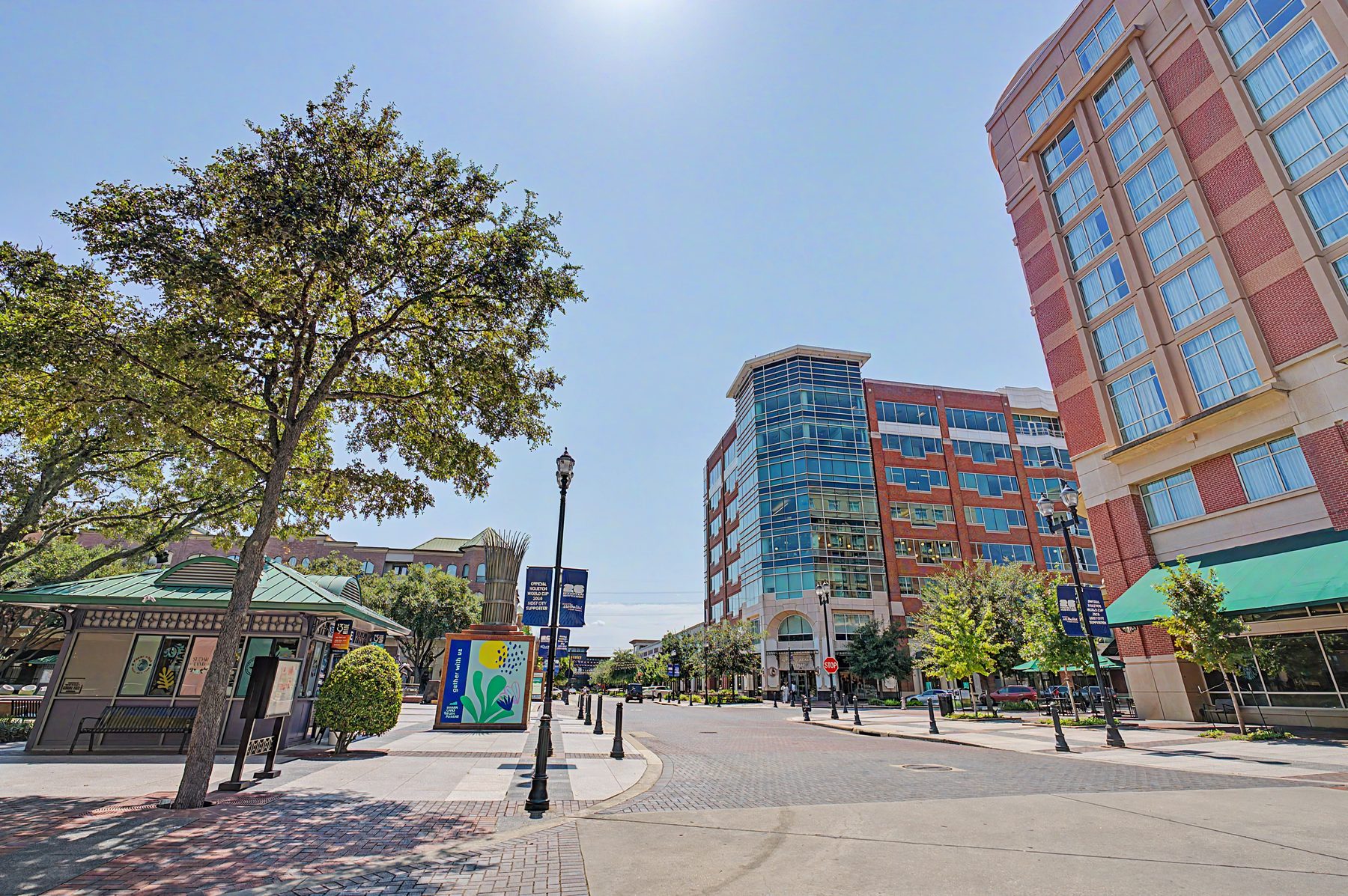
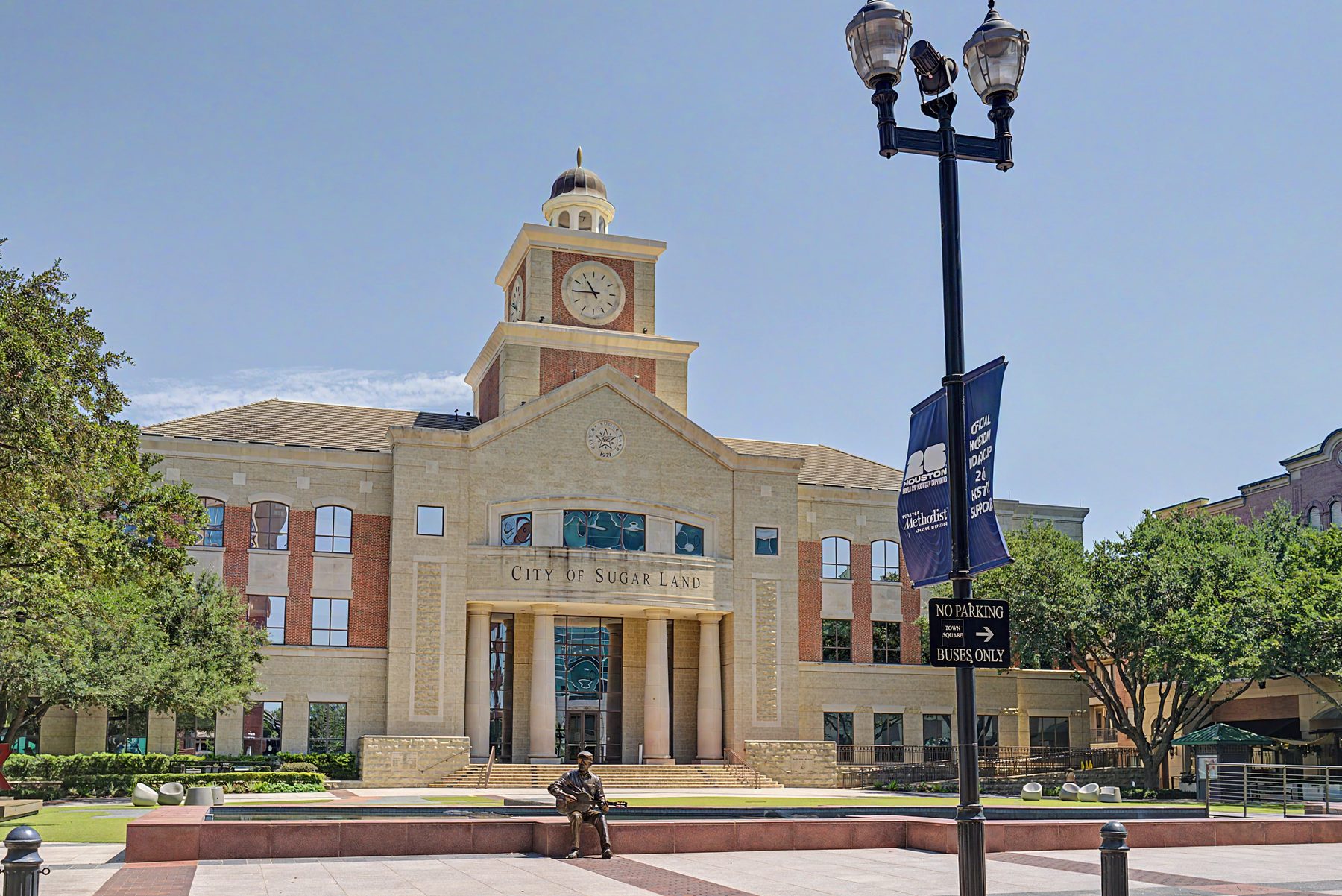
First Colony Mall opened on 14 March 1996 as the first regional mall in Fort Bend County, developed by Sugarland Properties. It added an open-air wing in 2006. Sugar Land Town Square, the city center development that includes City Hall, opened in October 2003 on one of the last First Colony parcels.
Nearby sit Constellation Field, the city-owned ballpark that opened on 26 April 2012 and now hosts the Sugar Land Space Cowboys, and the Smart Financial Centre, the city-owned venue that opened on 14 January 2017 and reconfigures between roughly 1,900 and 6,400 seats. Sugar Land Memorial Park runs 150 acres along the Brazos with about 2.5 miles of trails, and the University of Houston at Sugar Land campus sits on land transferred to the university system in 1998.
The ground this city was built on
Sugar Land’s name comes from sugar cane, and the plantations that grew it ran on forced labor, first enslaved and later leased convict labor. Conditions were brutal enough that workers called the place the hell hole on the Brazos.
In February 2018, a contractor building Fort Bend ISD’s James Reese Career and Technical Center on University Boulevard uncovered human remains. Archaeologists working under the Texas Historical Commission exhumed 95 individuals, 94 men and one presumed woman, African American victims of the convict leasing system, associated with a labor camp operating from roughly 1878 to 1909. They are known as the Sugar Land 95, and it is described as the largest such discovery in the country. The remains were reinterred in 2019, a report went to the Texas Historical Commission in 2020, an exhibit opened at the school in February 2022, and a historical marker was dedicated on Juneteenth in June 2025. A local activist, Reginald Moore, had warned for years that graves were there.
The site sits on former state prison land near the University of Houston campus, in northern Sugar Land. It is not inside the First Colony neighborhoods. I include it because it is the history of the ground this city stands on, and because leaving it out would be a choice too.
Who First Colony suits
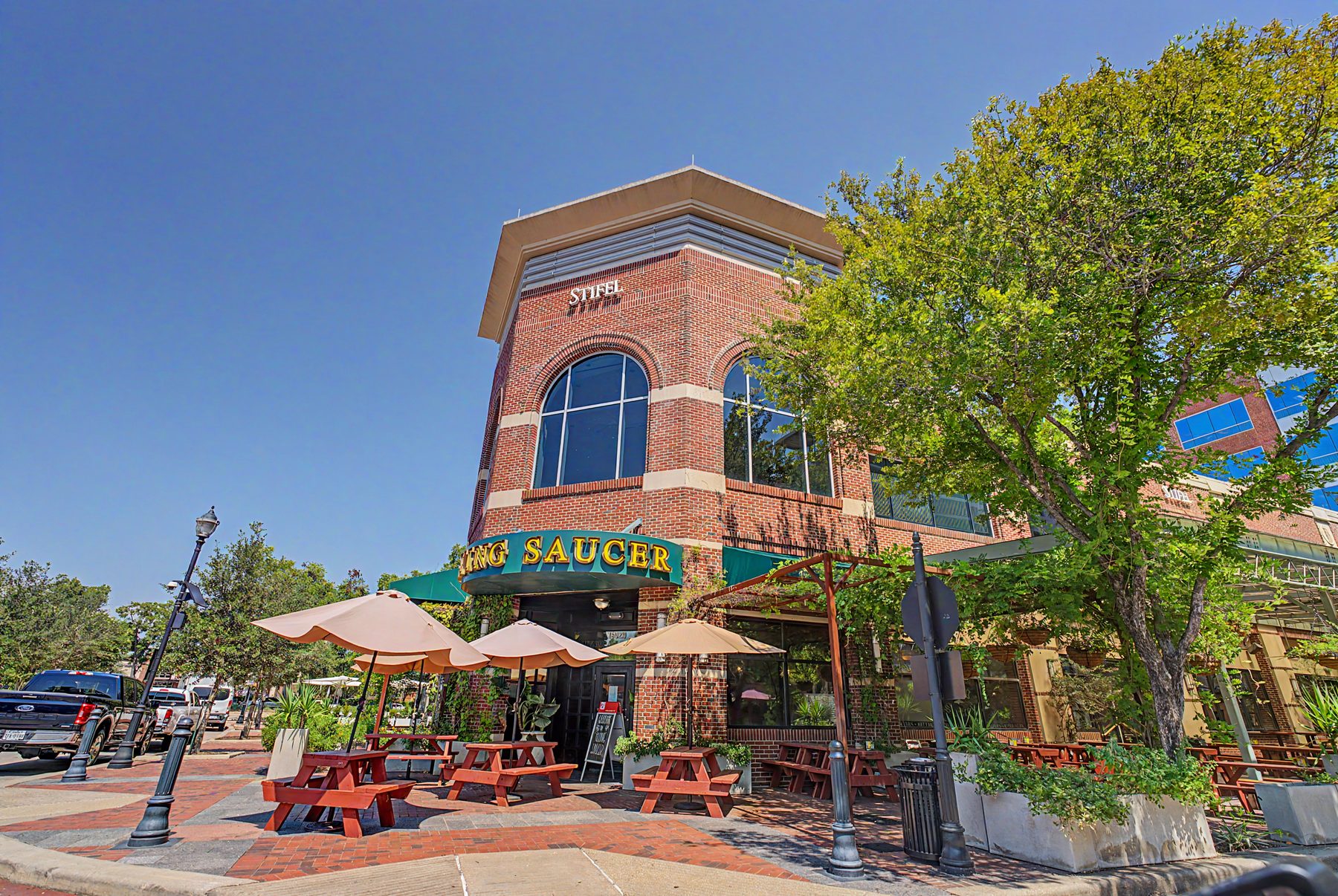
It suits a buyer who wants an established Sugar Land address with grown trees, a walkable mall and town square nearby, and Fort Bend ISD schools, and who is willing to shop by neighborhood rather than by community. The late-1990s sections are where the measurable value sits.
Sellers do well here when the price matches the build era and the section. Homes move in 19.5 days. Listings priced off the community median rather than their own comparables are the ones sitting at 45.5 days and counting.
It suits anyone who wants optionality. There are very few places in Fort Bend County where $250,000 and $2,000,000 buy in the same community.
Frequently asked questions
How much does a home in First Colony cost?
Sales in the twelve months to August 2026 ran from $246,500 to $5,255,000, with a median of $540,000 and $185.24 per square foot. About a quarter of sales closed under $400,000 and about a fifth above $800,000.
What is the best value in First Colony?
Measured per square foot, homes built between 1995 and 1999. They sold at $173.20 per foot, the lowest of any build period here, at a median 3,220 square feet, and they sold fastest at 14 days.
Is First Colony one homeowners association?
No. The First Colony Community Services Association is the largest but not the only one. Avalon, Chimneystone, Colony Village and the Highlands, Settlers Grove and Settlers Park, and Sugarwood have their own associations. Confirm which one governs the specific address.
What school district serves First Colony?
Fort Bend ISD, across several attendance zones. Clements High School serves much of the community, with Dulles, Elkins and Kempner serving other sections. A district-wide boundary review is active as of August 2026, so verify your exact address with the district.
Did First Colony flood during Harvey?
Parts did. The City of Sugar Land reported roughly 230 to 250 flooded homes citywide in 2017, concentrated in Settlers Park, Chimneystone, Sweetwater Section 8 and Colony Park. That was nine years ago and mitigation work followed. Flood risk is specific to the lot, so check the address on FEMA’s map service.
How fast do homes sell in First Colony?
The median is 19.5 days. Forty-two percent sell within two weeks and 63 percent within a month. Sixteen percent take longer than 60 days.
Talk to me about First Colony
I have sold real estate in the Houston area since 2002. I pull this data out of the MLS myself rather than repeating what a portal publishes, and when I cannot verify something I say so on the page rather than passing it along.
If you are buying in First Colony, I will show you comparables from your build era and your section, because a 1983 house and a 1997 house and a 2005 house are three different markets wearing one name. If you are selling, I will price you the same way. No pressure, no hype, and no promises I cannot keep.
Zach Emmanouil, Broker Associate, ZACH RE GROUP at C.R. Realty
ABR · CNE · CLHMS · SRES · 281-387-1535 · zach@zachregroup.com